MEDICAID CUTS WILL HURT CHILDREN WITH DISABILITIES

MEDICAID CUTS WILL HURT CHILDREN WITH DISABILITIES

WHY MEDICAID MATTERS

Most children with disabilities need medical care, therapies, or equipment–often all three–to thrive. For some, without these services provided in their homes, they are forced to grow up in facilities, away from their families and communities. Private insurance, even when affordable, provides only very limited coverage for the needs of the most vulnerable children. Medicaid (also called Medical Assistance or “MA”), fortunately, has been able to fill many of the gaps. While staff shortages have still left too many children without needed care, Medicaid has enabled family life for hundreds, if not thousands, of Pennsylvania children. Federal cuts to the Medicaid program endanger the availability of these necessary services.

Children receive Medicaid services primarily through the MA benefit for children known as EPSDT. Additional services can be funded through Home and Community-Based Service (HCBS) waivers. As a result of the EPSDT benefit, more than 6000 children, on any given day, receive medically necessary home health services (nurses or aides) at home or at school, enabling children to live in a family home while their parents go to work, support their families, and pay taxes. Children and teenagers who use wheelchairs have been provided equipment that enables them to get in and out of their homes--to get to school, play in the neighborhood, or exit in an emergency–without being carried, or crawling, up and down steps. Young children with autism have received early, evidence-based treatments that result in improved functioning throughout their lives. And these are just examples of services that are the direct result of the EPSDT benefit. A few fortunate children also receive services from HCBS waivers including home modifications such as widening doorways for wheelchair access, respite aides or nurses when parents need a break, community or alternate family homes when parents are unable to provide the extraordinary care their child needs due, for example, to their own health conditions or disabilities.

While HR 1, the 2025 bill that drastically cut Medicaid funds, does not specifically target these programs, it leaves Pennsylvania in the untenable position of finding a way to make up billions of dollars of losses to its MA program. HCBS programs are optional for states, making them an obvious target for state cuts. And while EPSDT is a mandatory program, states and their managed care contractors control the rates paid for services and the service authorization criteria and mechanisms. We are already seeing a substantial increase in denials of service requests. A shortage of staff for key services has been a long-standing problem that must be addressed by, among other things, rate increases—not rate cuts. Hopefully, the state will realize that, to the extent that cuts to these programs would result in institutional placements, the savings would likely be eaten up by the costs of institutional care.

If you care about the availability of these services, now is the time to tell your legislators how and why they are important to you or to someone you care about.

See our Impact Alert: How Medicaid Cuts Could Affect Children with Disabilities

FB LIVE CRITICAL CONVERSATION: HOW MEDICAID CUTS COULD AFFECT FAMILIES

Critical Conversations co- hosted by The Imagine Different Coalition and Vision for Equality had a conversation on how Medicaid cuts could affect children and adults with developmental disabilities or complex medical needs and what families and self-advocates can do to prepare. Streamed Live on Facebook on June 30th, 2026.

Featured speakers:

Meghann Luczkowski - Imagine Different Coalition

Francine Hogan - Vision for Equality

Dr. Josie Badger - J Badger Consulting

Erin Gabriel - PA Health Access Network

Erin Guay (Co-Director) - PA Health Law Project

David Gates Esq. - Imagine Different Coalition


FAMILIES AND PROVIDERS SPEAK TO PENNSYLVANIA LAWMAKERS

FAMILIES AND PROVIDERS SPEAK TO PENNSYLVANIA LAWMAKERS

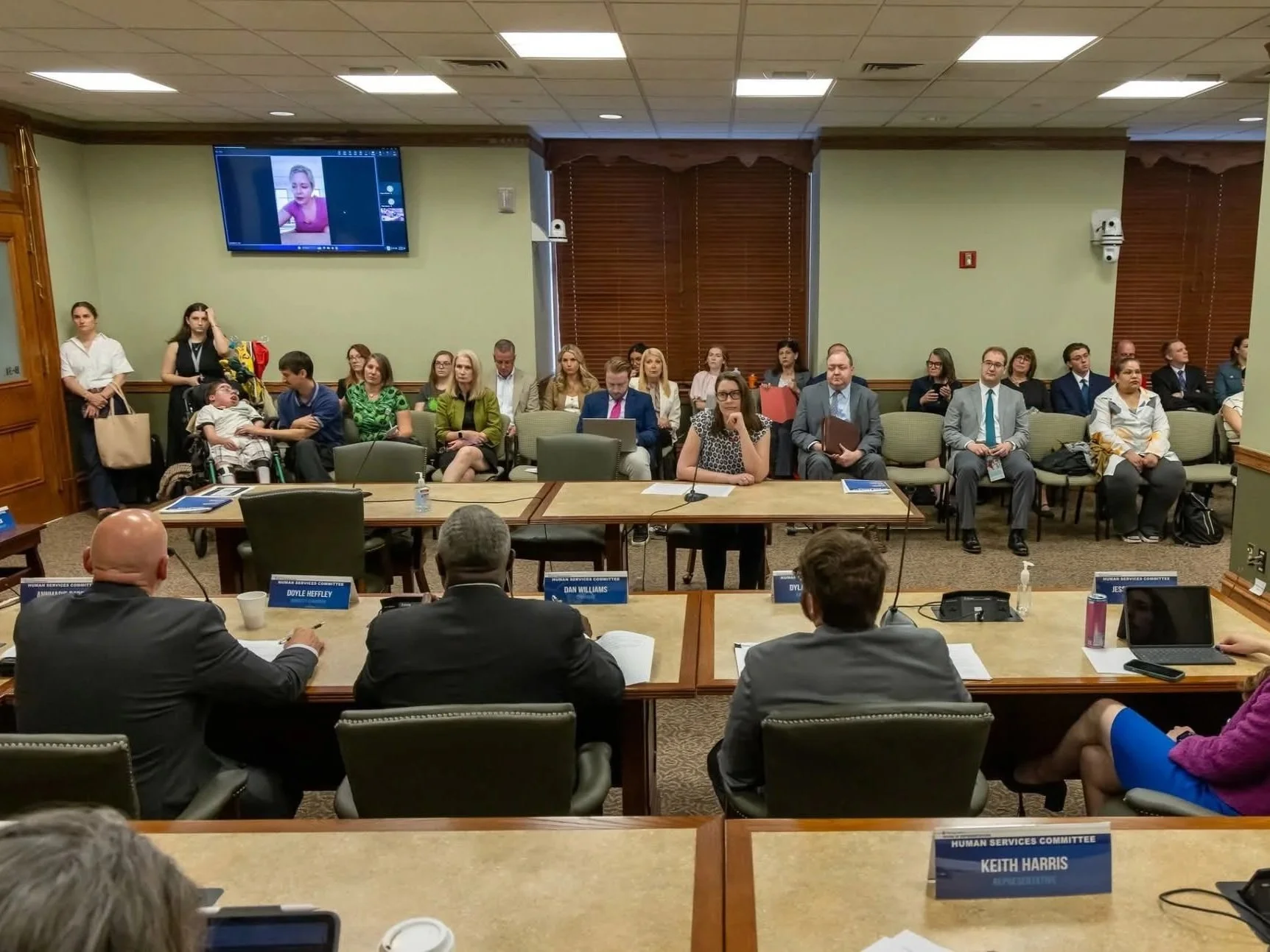
On June 9, 2026, parents, home-care providers, and Medicaid organizations spoke to the Pennsylvania House Human Services Committee about Complex Care Assistant programs and proposals to pay trained family members for providing approved care at home. The panelists were the following:

Panel 1 - Meghann Luczkowski (parent), Hannah Brown (parent),

Panel 2 - Deanna Pack (Area Director of Clinical Services/Administrator, 365 Health Services, LLC.), Bill Sczepanski (Executive Vice President of Public Policy and Government Relations, Team Select Home Care), Michele Werner (RNC, BSN Regional Director of Regulatory and Government Affairs, Angels of Care Pediatric Home Health)

Panel 3 - Emily Katz (MPH Executive Director, PA Medicaid Managed Care Organizations PAMCO).

Read the Committee Materials here.

You can watch the entire hearing here.

CHILDREN’S MEDICAID SERVICES UNDER ATTACK FROM FEDERAL AGENCY

PA’s Medicaid program funds vital in-home and community services for children with medical complexities and developmental disabilities, including in-home nursing, home health aides, behavioral aides and waivers. However, top officials with the federal agency that oversee Medicaid (CMS) and Members of Congress (especially the House Energy and Commerce  committee) are claiming that these Medicaid-funded in-home services are “rife with fraud,” especially when families are paid to provide care -- an allegation with which we strongly disagree. 

RFK Takes Issue with Medicaid paying family caregivers:

We believe that paying parents to provide approved medically necessary care is not fraud but essential to enable children with medical complexities and developmental disabilities to live with their families, attend school, and participate in their communities. The caregiving needed by these children is well beyond that needed for typically developing children. It is well established that there are not enough nurses and home health aides to fill the medically necessary shifts approved by Medicaid. Paying family members allows them to provide the exceptional level of care their children need and still pay their household bills. If you are a family member who is being paid to provide care by your child’s home health agency, we would like to hear from you.

WE WANT TO HEAR FROM YOU!!!!

If you are a family member who is being paid to provide care by your child’s home health agency, we would like to hear from you. Fill out a brief survey and we’ll be in touch!


PAYING FAMILY CAREGIVERS ATTACKED BY TOP US ADMINISTRATION OFFICIAL

CHILDREN WITH DISABILITIES IMPACT ALERT: PAYING FAMILY CAREGIVERS ATTACKED BY TOP US ADMINISTRATION OFFICIAl

Robert F. Kennedy Jr., head of the US Department of Health & Human Services, recently claimed that programs which pay family members to provide care for loved ones with disabilities, like PA’s Medicaid program, are “rife with fraud.”

We believe that paying parents to provide approved medically necessary care is not fraud but essential to enable children with medical complexities and developmental disabilities to live with their families, attend school, and participate in their communities. The caregiving needed by these children is well beyond that needed for typically developing children. It is well established that there are not enough nurses and home health aides to fill the medically necessary shifts approved by Medicaid. Paying family members allows them to provide the exceptional level of care their children need and still pay their household bills.

WE WANT TO HEAR FROM YOU!!!!

If you are a family member who is being paid to provide care by your child’s home health agency, we would like to hear from you. Fill out a brief survey and we’ll be in touch


FEDS FOCUS ON FRAUD IN MEDICAID HOME CARE AND WAIVERS WHILE CUTS LOOM

As the debate over access to and affordability of health care intensifies in advance of the Congressional midterm elections, a coordinated effort is underway between members of the majority leadership of the US House and the federal Medicaid agency to turn attention from access and affordability to Medicaid fraud. Of particular concern to families of children who rely on Medicaid-funded home care and waivers is the focus of the federal fraud allegations on home care and waivers. Medicaid fraud is a serious problem that takes money away from services children need. Pennsylvania has recognized that and has been addressing it aggressively for some time.

Despite those successes, the US House Committee that is responsible for Medicaid legislation and oversight started an inquiry into potential Medicaid fraud in Pennsylvania involving home health, waivers, behavioral health, and some other Medicaid services without good reason. They have asked for a large number of reports and data from the Department of Human Services. At the same time, the federal agency that administers Medicaid (Centers for Medicare and Medicaid Services or CMS) has recently announced a new approach to fraud that will rely more heavily on options to pause or withhold significant amounts of federal funding in cases of potential fraud, which could have broad implications for Pennsylvania’s Medicaid program and the individuals that rely on it.

Read our Impact Alert: FEDS FOCUS ON FRAUD IN MEDICAID HOME CARE & WAIVERS WHILE CUTS LOOM


FB LIVE CRITICAL CONVERSATIONS: HOW TO TALK TO YOUR LEGISLATORS.

Critical Conversations co-hosted by Imagine Different Coalition and Vision for Equality had a conversation on, “How to talk with your legislators?” Streamed live on Monday, April 20, 2026 at 6:30 PM ET on FB Live. An informative conversation about how to engage with your elected state and federal legislators regarding the importance of Medicaid.

Featured Speakers

State Representative Dan Frankel

State Representative Joe Hohenstein

David Gates (attorney at law, Imagine Different Coalition)

Erin Gabriel (PHAN)

Tom Carasiti and Ned Whitehead (Vision for Equality)

UNITED STATES HOUSE COMMITTEE QUESTIONS PA ABOUT MEDICAID HOME HEALTH, WAIVERS AND BEHAVIORAL HEALTH - MARCH 19, 2026

The leadership of the US House Committee that oversees Medicaid has started an inquiry into potential Medicaid fraud in PA involving home health, waivers, behavioral health, and some other Medicaid services. They have asked for a large number of reports and data from the Dept. of Human Services by March 17th when they will hold hearings on Medicaid fraud in Washington, DC. Although the Committee noted that "the Pennsylvania Attorney General's Medicaid Fraud Control Section charged more Medicaid fraud than any other state," they claimed that PA's Medicaid waivers, home health and behavioral health services "are considered high risk for fraud, waste and abuse."

Claims of widespread fraud in programs serving children with complex medical needs and developmental disabilities are likely to affect state budget negotiations in the coming months as well as potential federal actions against PA.

Read the complete United States House Committee Letter here.

HOME AND COMMUNITY-BASED SERVICES (HCBS) WAIVERS: HOW AVAILABLE WILL THEY BE TO CHILDREN WITH DEVELOPMENTAL DISABILITIES?

Background:

For decades, the federal Medicaid program has assisted states in funding community-based disability services and supports for people with disabilities who, without such services, would need institutional care. States can choose who will be eligible and what services they will provide in these programs (referred to as “waiver” programs), and how many people they can afford to serve. Many of these programs have long waiting lists. This past summer, Congress cut billions of dollars from the Medicaid program. While federal law continues to allow states to use their more limited funds to run these community-based programs if they so choose, the severe cuts to Medicaid have made it necessary for states to consider cutting back on optional programs like waiver programs.

Since the 1980s, Pennsylvania has been using Medicaid funds to provide a wide range of waiver services to distinct subsets of the disability community. Some of these waiver programs, described below, have been available to children, to the extent that funds have allowed. Due to long waiting lists and a false belief that children can be fully served by other programs, children make up a very small percentage of the tens of thousands of people served. Still, for the small number of children included, the waivers provide incredibly important supports that are enabling these children to grow up in their family homes and communities.

Read our Impact Alert: HOME AND COMMUNITY-BASED SERVICES (HCBS) WAIVERS: HOW AVAILABLE WILL THEY BE TO CHILDREN WITH DEVELOPMENTAL DISABILITIES

IMPACT OF FEDERAL CUTS ON CHILDREN’S FINANCIAL ELIGIBILITY FOR MEDICAL ASSISTANCE

February 15, 2026

Many middle-class children with disabilities in Pennsylvania are enrolled in Medical Assistance (also known as Medicaid) and rely upon critical Medical Assistance-funded services that enable them to live and thrive in their homes and communities. As explained in our Impact Alerts on home health, medical equipment and behavioral health, Medical Assistance covers a wide range of services and supports for children with developmental disabilities and complex medical conditions, including services that are not covered by private insurance. For children who have private insurance, Medical Assistance also provides co-payments for hospital stays, surgeries, and other expensive treatments that many working families simply cannot afford. To learn more, click here.

TIPS FOR FAMILIES WANTING TO TALK TO THEIR LEGISLATORS

Identify the legislators (House & Senate) in whose district you live- Legislators are more responsive to voters who live in their district (“constituents”).

See our Impact Alert: Tips for Families Wanting to Talk to Their Legislators.

CHILDREN’S BEHAVIORAL HEALTH SERVICES

In Pennsylvania, Medicaid, also called Medical Assistance (or MA), pays for tens of thousands of children to receive needed behavioral health services at no cost to their parents, and often in their own homes, schools, and communities. When behavioral health services are determined by a doctor and an MA health plan to be medically necessary, they may include outpatient therapy, in-home aides, behavior consultants, school or community aides, specialized autism treatment, medication management, residential treatment programs, acute care hospital stays, and more. The home and community-based services are called by different names, e.g., wraparound, Intensive Behavioral Health Services (IBHS), Applied Behavior Analysis (ABA), outpatient therapy, partial hospitalization, and so on.

If your child is receiving behavioral health services with no copayment or deductible, their services are most likely being funded, in full or in part, by Medicaid.  

Read our Impact Alert: CHILDREN’S BEHAVIORAL HEALTH SERVICES

STATE BUDGET WILL IMPACT CHILDREN’S IN-HOME SERVICES IT’S TIME TO BE HEARD

WHY YOU SHOULD CARE ABOUT THE STATE BUDGET

Medicaid (Medical Assistance/MA) funds a variety of services that support family life for children with disabilities. These include in-home nursing, home health aides, medical equipment, special education related services, and behavior supports. (See our Impact Alerts below for more information on those services) About half of the funds for Medicaid-covered services come from the state and the state funds dedicated determine the amount of federal Medicaid funds the state will draw down. The amount of those funds is set in the state budget.  If the state budget doesn’t provide enough money for the services children will need during the coming state budget year (July 2026-June 2027), the state Medicaid agency and its contracted Medicaid Managed Care Organizations will be under intense pressure to reduce costs. One way the Medicaid Managed Care Organizations are likely to reduce costs is to reduce the number of hours of home health or behavioral health services they approve. We are seeing that now. The other way Medicaid Managed Care Organizations can cut costs is to reduce payments to providers which can result in some providers no longer accepting Medicaid.  So, the amount of money the Governor and the state legislators put into the state budget for Medicaid impacts the ability of children to get the amount of services they need to remain at home with their families. This makes it critical that families use this key time to educate their state officials about the full extent of their children’s service and support needs.

Read our Impact Alert: STATE BUDGET WILL IMPACT CHILDREN’S IN-HOME SERVICES IT’S TIME TO BE HEARD

MEDICAID AND CHILDREN’S DISABILITY EQUIPMENT

Thankfully, Medicaid provides the funding for the equipment that allows children and youth with physical and medical disabilities to live and thrive in their homes and communities. In addition, children who are also enrolled in certain Medicaid home and community-based service waiver programs, such as the Consolidated or Community Living waivers, can receive home and vehicle modifications to accommodate their equipment, such as widened doorways, van modifications, accessible showers, etc.

Read our Impact Alert: MEDICAID AND CHILDREN’S DISABILITY EQUIPMENT

GETTING TO YES: WHAT TO DO WHEN YOUR CHILD’S MEDICAL ASSISTANCE INSURER DENIES OR REDUCES SERVICES

THE PROBLEM

Most children on Medical Assistance (also called Medicaid or just MA) are enrolled in Managed Care Organizations (“MCOs”) --one for medical care and another for behavioral services. These MCOs get to determine the amount of services for which they will pay. Some of these MCOs appear to be preparing for the upcoming cuts to federal funding by reducing the amount of services they approve.

PHONE CALLS NOT ENOUGH

Most people’s inclination when finding out their child has had their services reduced or terminated is to call the MCO. However, if you rely on phone calls alone, you may lose important rights that can help you get your child’s services back.

Read our Impact Alert: WHAT TO DO WHEN YOUR CHILD’S MEDICAL ASSISTANCE INSURER DENIES OR REDUCES SERVICES

Family Facilitators

PENNSYLVANIA'S FAMILY FACILITATORS HELP INSTITUTIONALIZED CHILDREN ACCESS MEDICAID SERVICES AND OTHER RESOURCES NEEDED TO RETURN TO THEIR FAMILY HOMES

State-contracted Family Facilitators help children with complex medical needs leave and avoid institutional placements. The Facilitators coordinate with child-serving agency personnel, including the care managers at the Medicaid-funded managed care organizations, to obtain the services children need, such as in-home nurses, aides, and therapists, medical covered by the children’s Medicaid benefit.

Read our Impact Alert: PENNSYLVANIA'S FAMILY FACILITATORS HELP INSTITUTIONALIZED CHILDREN ACCESS MEDICAID SERVICES AND OTHER RESOURCES NEEDED TO RETURN TO THEIR FAMILY HOMES

To view the In Brief, click here.

SCHOOL-BASED ACCESS PROGRAM

Does your child receive special education or early intervention services and are they on a HealthChoices plan* or have Medical Assistance (Medicaid)?

If yes to both, your child’s school or Intermediate Unit (IU) may be receiving funds through Medical Assistance under a special program for some special education and early intervention services.**

These services include in-school nursing and personal care aides.***

The services for which school districts and IUs get Medical Assistance funds are in addition to any services your child receives outside of school paid for by the child’s HealthChoices plan or regular Medical Assistance.

Over half of Pennsylvania’s Medical Assistance (Medicaid) funds, including these special funds for schools and IUs, come from the federal government. Significant cuts to federal Medicaid funding are contained in a recent federal law--HR1.  Unless Congress changes this law, these cuts will go into effect in the next three years. Pennsylvania doesn’t have the money to make up the loss of those federal funds so the state will have to reduce funding for some Medicaid programs--which may include this program which provides the additional funds to schools and IUs for special education and early intervention.

*The HealthChoices plans are: Amerihealth Caritas PA; Geisinger GHP Family; Health Partners Plans (not CHIP); Highmark Wholecare; Keystone First (not CHIP); United Healthcare Community Plan; and UPMC for You.

**The special program is called the “School-Based Access Program.” School districts and IUs are eligible to enroll and then bill a contractor for certain special education and early intervention services provided to students on HealthChoices/Medical Assistance as specified in the student’s IEP. The federal Medicaid match for those services is paid to the school district or IU which supplements the school district’s or IU’s other special education funds.

*** For a list of other services billable by school districts and IUs under the School-Based Access Program and other information on this program, go to this link.

Read our Impact Alert: SCHOOL BASED ACCESS PROGRAMS

To view the In Brief, click here

MEDICAID (MA) PAYS FOR MUCH NEEDED IN-HOME NURSES AND AIDES FOR THOUSANDS OF PENNSYLVANIA’S CHILDREN

Under federal law, children enrolled in Medicaid, also known as Medical Assistance (MA), have a legal right to receive medically necessary services at no cost to their families.  For children who have medical conditions, these services include nurses and aides who make it possible for them to live full lives with their families, friends, and loved ones in their homes, schools, and communities. Every year, across our Commonwealth, thousands of children with medical and developmental needs are determined, by their doctors and Medicaid-funded health plans, to need these home health services. Some have respiratory conditions requiring a tracheostomy and/or ventilator for breathing. Some have gastrointestinal conditions requiring feeding tubes. Others have conditions such as Muscular Dystrophy, Cerebral Palsy, severe asthma, diabetes, epilepsy, intellectual disability, and the list goes on. 

Read our Impact Alert: MEDICAID (MA) PAYS FOR MUCH NEEDED IN-HOME NURSES AND AIDES FOR THOUSANDS OF PENNSYLVANIA’S CHILDREN

MEDICAID ENABLES FAMILY LIFE FOR CHILDREN WITH COMPLEX DISABILITIES THROUGH “LIFESHARING”

MEDICAID ENABLES FAMILY LIFE FOR CHILDREN WITH COMPLEX DISABILITIES THROUGH “LIFESHARING”

The federal Medicaid (or MA) program gives states an option to provide disability-related home and community-based services (HCBS) that would not otherwise be covered by the MA program to individuals who, without these additional services, would need to live in institutions. All states provide some version of community-based services. While Pennsylvania’s HCBS waivers primarily serve adults, we do have several HCBS waivers that can cover children with certain developmental disabilities including: medical complexity, intellectual disability, autism, and developmental delay in young children that will likely result in a diagnosis of intellectual disability or autism. One of the services that can be offered to children (and adults) is called Life Sharing. 

Read our Impact Alert: MEDICAID ENABLES FAMILY LIFE FOR CHILDREN WITH COMPLEX DISABILITIES THROUGH “LIFESHARING”

THE RELATIONSHIP BETWEEN MEDICAID AND FAMILY LIFE FOR CHILDREN WITH DISABILITIES

Introduction

Most children with disabilities need medical care, therapies, or equipment–often all three–to thrive. For some, without these services provided in their homes, they are forced to grow up in facilities, away from their families and communities. Private insurance, even when affordable, provides only very limited coverage for the needs of the most vulnerable children. Medicaid, fortunately, has been able to fill in many of the gaps. While staff shortages have still left too many children without needed care, Medicaid has enabled family life for hundreds, if not thousands of Pennsylvania children. Preserving this safety net for children requires certain provisions of Title XIX of the Social Security Act (Medicaid) to be adequately funded – specifically, Early and Periodic Screening, Diagnostic, and Treatment services, or EPSDT, defined at 42 USC § 1396d(r), and Home and Community-Based Services (HCBS), defined at 42 USC § 1396n(c). 

Read our Impact Alert: THE RELATIONSHIP BETWEEN MEDICAID AND FAMILY LIFE FOR CHILDREN WITH DISABILITIES